
Single Post
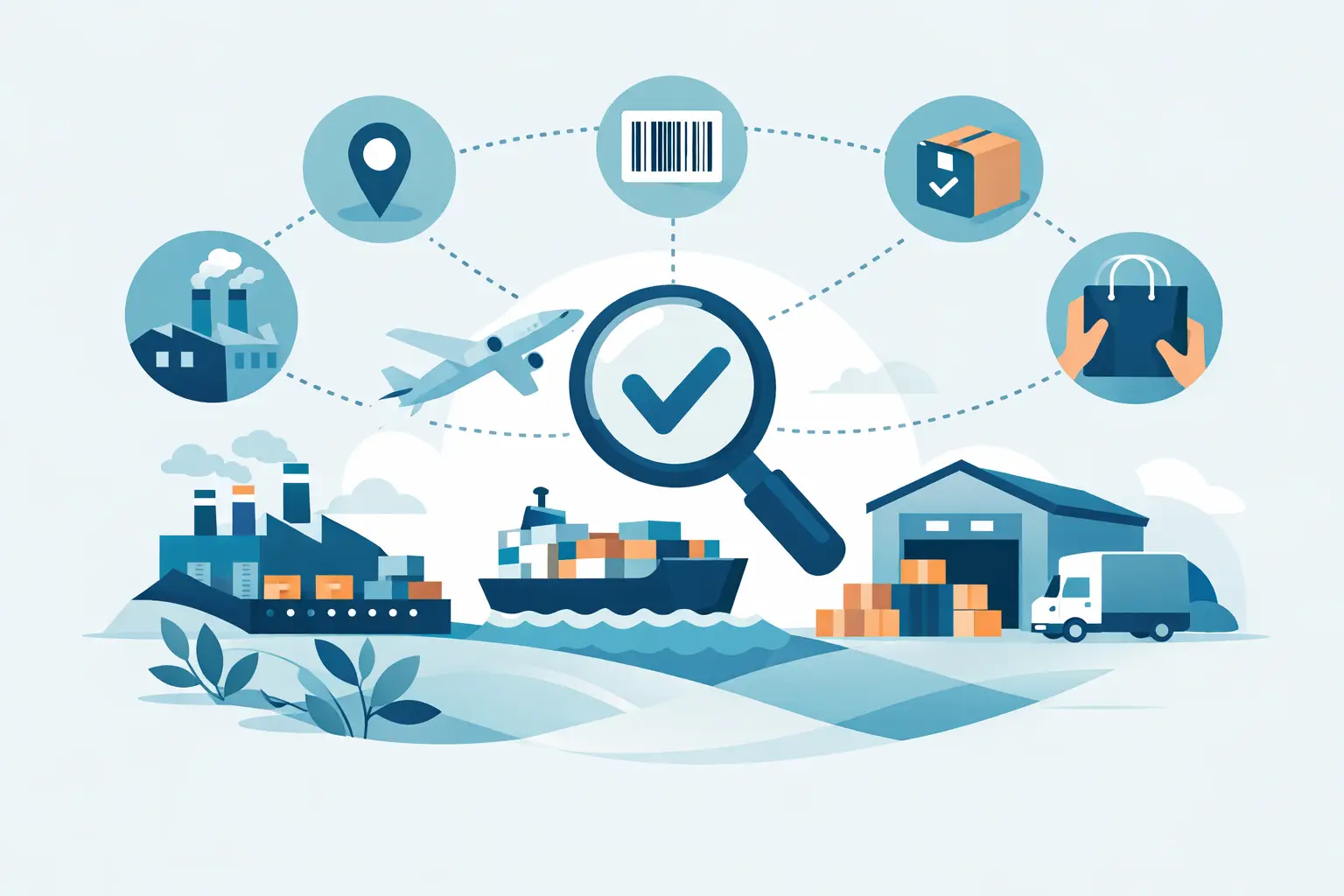
A shipment can meet grade, volume, and delivery targets and still create serious exposure for the buyer if its origin cannot be verified. In mineral and metals trade, that is why the question what is supply chain traceability matters far beyond paperwork. It affects compliance, reputational risk, customer qualification, financing, and the ability to move material across borders without disruption.
For procurement teams, traders, and manufacturers, traceability is not a marketing term. It is a control system. It gives buyers a documented line of sight into where material came from, how it changed hands, what processing steps occurred, and whether each stage aligns with legal, ethical, and commercial requirements.
What is supply chain traceability?
Supply chain traceability is the ability to track and verify a product’s journey from its point of origin through processing, transport, export, import, and final delivery. In practical terms, it means a buyer can review documented evidence showing where a material was sourced, who handled it, what quantities moved, and whether the shipment remained consistent with declared origin and compliance standards.
In the strategic minerals sector, this usually includes far more than a basic chain of custody. Buyers often need production records, supplier identification, site-level sourcing data, transport logs, export documents, assay or quality verification, and transaction records that connect one stage to the next.
That level of visibility matters because minerals do not move through simple supply chains. Material can be aggregated, processed, repacked, exported through multiple checkpoints, and sold across jurisdictions with different regulatory expectations. Without traceability, each handoff introduces uncertainty.
Why supply chain traceability matters in mineral trade
The value of traceability becomes clear when a buyer needs to answer a straightforward question from a customer, auditor, bank, or regulator: where did this material come from, exactly?
If the answer depends on assumptions, verbal assurances, or incomplete paperwork, risk rises quickly. A missing origin record can delay customs clearance. A gap in chain-of-custody data can weaken an ESG review. Unverified sourcing can put downstream supply agreements at risk, especially in sectors tied to batteries, electronics, energy infrastructure, and industrial manufacturing.
For minerals sourced from high-risk or heavily scrutinized regions, traceability also supports buyer confidence at the commercial level. It helps procurement teams compare suppliers on more than price alone. Two shipments may look similar on paper in terms of tonnage and assay, but the shipment supported by verified sourcing records, export compliance, and documented movement through the supply chain is the more bankable asset.
That does not mean every buyer needs the same depth of traceability. It depends on the material, end use, customer obligations, and destination market. A trader making a short-term spot purchase may focus on origin and export documentation, while a battery supply-chain stakeholder may need much deeper source verification and reporting discipline.
How supply chain traceability works in practice
Traceability is built by linking records across the life of a shipment. At the source, the process begins with identifying the mining site, cooperative, licensed operator, or approved supplier. From there, material is logged as it is collected, weighed, graded, stored, and transported.
As the product moves through aggregation or processing, traceability depends on whether quantities remain segregated or are blended. Segregated material is easier to trace back to a defined source. Blended material can still be traceable, but the documentation must clearly show which sources contributed to each lot and under what controls.
The next phase usually involves transport and export documentation. This can include packing records, waybills, warehouse logs, customs declarations, certificates, commercial invoices, and quality documentation. Strong traceability means those records match each other in a way that makes the shipment auditable.
At the buyer end, traceability becomes useful when records are not just collected but organized. A document stack is not the same as a traceability system. The system works when a procurement or compliance team can follow a shipment from source to delivery without major gaps, contradictions, or unexplained transfers.
What buyers should expect from a traceable supply chain
When evaluating a supplier, buyers should expect traceability to answer four core questions clearly. What is the precise origin of the material? Who handled it at each stage? Do quantities and quality records remain consistent from source to shipment? And does the documentation support legal export and import requirements?
Strong suppliers can usually present that information in a structured way, not only when a problem appears. They maintain supplier records, shipment references, compliance files, and logistics visibility as part of standard operations.
This is where execution matters. A supplier may claim ethical sourcing and traceability, but if records are fragmented across brokers, transporters, processors, and local intermediaries, the buyer still carries exposure. In cross-border mineral trade, verification has to survive operational pressure, not just presentation.
Common limits and trade-offs
Traceability is valuable, but it is not always simple. In upstream mineral markets, especially where infrastructure is inconsistent or production comes from multiple small operators, building a complete traceability chain can be operationally demanding.
There is also a trade-off between speed and documentation depth. Some buyers want immediate shipment availability, while full verification can require more time for record collection, validation, and reconciliation. The right balance depends on the buyer’s risk tolerance and downstream obligations.
Cost is another factor. Better traceability often requires more site controls, more administrative discipline, and more logistics oversight. That can raise procurement costs in the short term. For many industrial buyers, though, the cost of weak traceability is higher. Delays, rejected shipments, customer disputes, and compliance failures tend to be more expensive than disciplined supply-chain controls.
Technology can help, but it is not a substitute for operational integrity. Digital tracking tools, lot IDs, and shared reporting systems improve visibility, yet they only work if the underlying data is reliable. If source information is inaccurate at the start, the digital trail simply scales the error.
What is supply chain traceability for compliance teams?
For compliance teams, what is supply chain traceability if not documented risk control? It is the practical mechanism that connects sourcing claims to verifiable evidence.
That matters in areas such as origin verification, anti-money laundering review, sanctions screening, customs accuracy, conflict-sensitive sourcing, and customer due diligence. Traceability supports the internal controls that buyers need when dealing with strategic minerals, especially when supply chains cross high-risk jurisdictions or feed regulated industries.
It also helps companies respond faster when questions arise. If a regulator, insurer, financing partner, or end customer requests proof of origin or movement, a traceable supply chain allows the business to respond with records rather than reconstruction. That speed can protect both revenue and reputation.
Why traceability matters for long-term supply continuity
Buyers often think of traceability as a compliance requirement first. It is that, but it is also a supply continuity tool.
When a supplier has real visibility into origin, logistics, processing, and export handling, disruptions are easier to identify and manage. If a delay occurs at a checkpoint, if documentation needs correction, or if a source site changes output, a traceable system provides earlier warning and better decision support.
For companies sourcing cobalt, cassiterite, columbite, copper, coltan, gemstones, and other strategic materials, continuity depends on more than having access to product. It depends on having access to product that can keep moving through the market. Material that cannot pass due diligence or documentation review is not truly available supply.
That is why serious international buyers tend to prefer suppliers with verified sourcing structures, export readiness, and full shipment oversight. HH Strategic Metals operates in that environment, where trust is built through documentation, compliance discipline, and control from source to delivery.
What buyers should ask before purchasing
A practical traceability review starts with direct questions. Ask whether the supplier can identify the source site or supplier network tied to the shipment. Ask how material is logged, stored, and transported. Ask whether lots are segregated or blended. Ask which documents support origin, quality, export compliance, and chain of custody.
Then look at consistency. The strongest traceability systems do not rely on one impressive certificate. They show alignment across weights, dates, parties, locations, and shipment records. If those details conflict, the issue is not only administrative. It may point to broader control weaknesses.
In strategic sourcing, the most useful supply-chain data is the data that stands up under pressure. Buyers do not need perfect theoretical visibility into every upstream variable. They need reliable, auditable information that reduces uncertainty and supports confident procurement decisions.
Traceability does not eliminate risk entirely, especially in complex mineral markets. What it does is replace guesswork with evidence, and that is often the difference between a shipment that simply arrives and a shipment a buyer can confidently use, finance, and resell.