
Single Post
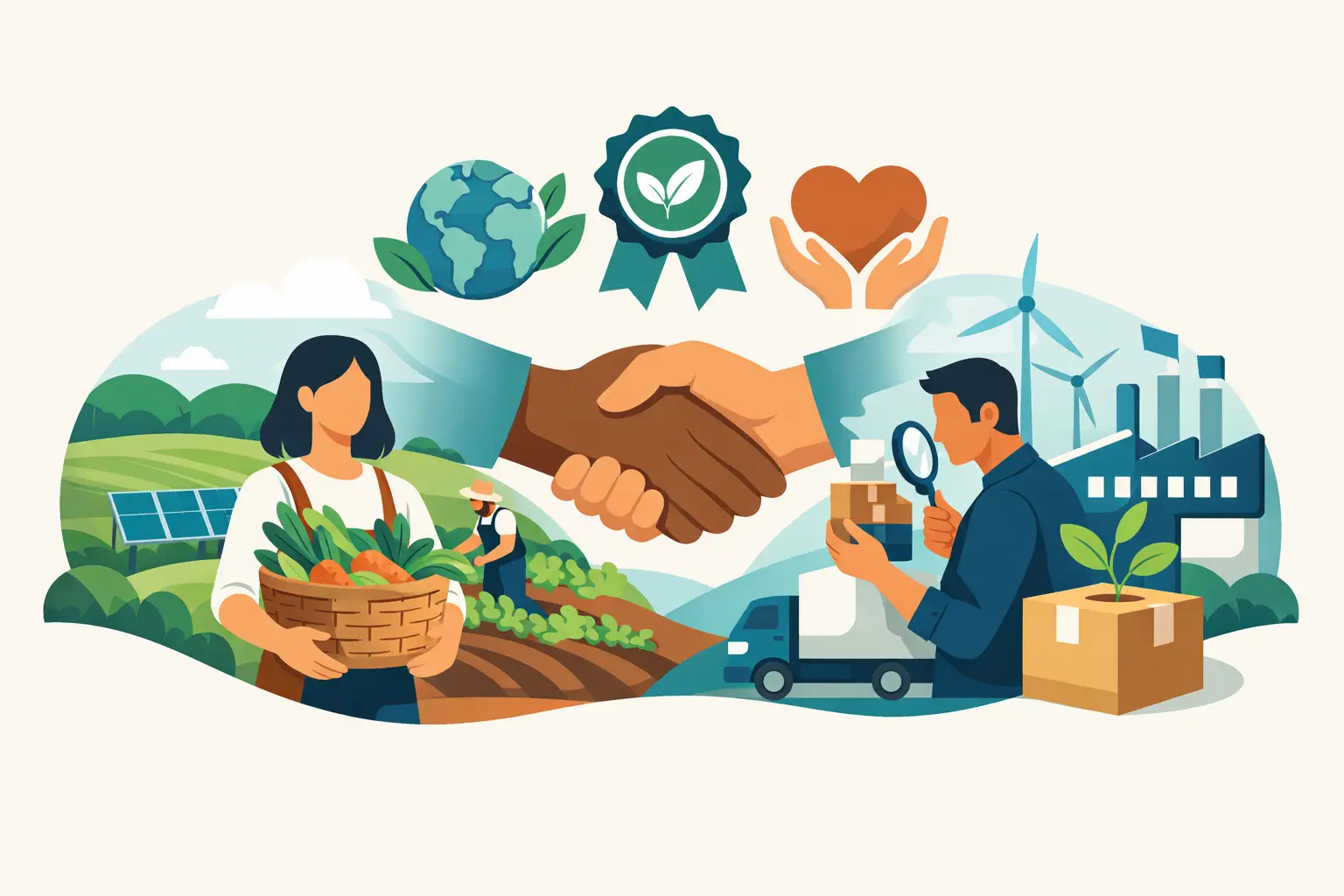
A supplier says its material is responsibly sourced. For a procurement team buying cobalt, cassiterite, columbite, copper, or gemstones from Central Africa, that statement means very little without proof. The real value in ethical sourcing examples is not the label itself. It is the operating model behind the claim – the controls, records, and verification steps that reduce legal, commercial, and reputational risk.
In mineral supply chains, ethical sourcing is rarely one policy or one certificate. It is a system of practical decisions across origin verification, labor oversight, transport security, export documentation, and buyer reporting. Strong sourcing programs protect more than brand reputation. They help prevent shipment delays, customs issues, disrupted production schedules, and exposure to non-compliant material.
What ethical sourcing means in mineral trade
For industrial buyers, ethical sourcing means obtaining raw materials through a supply chain that is documented, legally compliant, and managed against known risk factors. In practice, that includes confirming where the material came from, whether it was traded through authorized channels, whether labor conditions meet required standards, and whether movement from mine to export point can be traced.
This matters more in strategic minerals because supply chains are often fragmented. Material can pass through cooperatives, aggregators, processors, transporters, and export entities before it reaches the end buyer. Each handoff introduces risk. A credible sourcing partner reduces that risk by maintaining control points and providing evidence, not broad assurances.
1. Mine-site verification with documented origin
One of the clearest ethical sourcing examples is direct verification at the point of origin. In minerals, this means confirming that extraction is taking place at a known site, under recognized local authority, with records that connect production to a specific mine or cooperative.
This sounds basic, but it is where many sourcing failures begin. If a supplier cannot establish origin with confidence, every downstream claim becomes weaker. Documented origin helps buyers support due diligence requirements, validate declarations made to regulators or customers, and separate legitimate material from questionable inventory.
The trade-off is speed. Verifying origin properly can slow onboarding of new suppliers or lots. But for buyers with compliance exposure, slower qualification is usually less costly than later disruption.
2. Chain-of-custody controls from mine to export
Traceability is often discussed in broad terms, but the useful version is operational. A strong chain-of-custody process records when material changes hands, where it is stored, how it is transported, and how lots are identified through processing and shipment.
This is one of the most important ethical sourcing examples because it turns a claim into an auditable process. If a lot of cassiterite or cobalt is mixed without controls, or if transport records are inconsistent, traceability quickly becomes unreliable. Buyers then face uncertainty around both compliance and quality consistency.
Effective chain-of-custody systems do not need to look identical across every exporter. What matters is whether the controls are disciplined, repeatable, and available for review. A sophisticated dashboard helps, but disciplined paperwork and lot management often matter more than presentation.
3. Screening for child labor and forced labor risk
No serious sourcing program can avoid labor conditions. In high-risk regions, ethical sourcing requires active screening for child labor, forced labor, coercive recruitment, and unsafe site practices. That screening has to go beyond supplier self-attestation.
In practical terms, this may involve site assessments, local partner oversight, worker interviews through approved channels, escalation procedures, and refusal to source from operations that fail minimum standards. For buyers, this is not only a moral issue. It is also a regulatory and contractual issue with direct commercial consequences.
There is an important nuance here. Some suppliers treat labor screening as a one-time gate. That is rarely enough. Conditions can change with seasonality, informal subcontracting, or shifts in local control. Ongoing monitoring is more credible than a static approval file.
4. Legal export compliance and complete documentation
Ethical sourcing is often reduced to what happens at the mine. In reality, export compliance is just as important. Material that is sourced legally but shipped with incomplete or inaccurate documents can still create serious exposure for the buyer.
A practical example is the disciplined preparation of export permits, customs declarations, certificates of origin where applicable, assay reports, commercial invoices, packing details, and transport records. When those documents align with the physical material and the transaction terms, the supply chain becomes easier to defend and easier to move.
This is especially important for international procurement teams working under internal audit requirements. Documentation is not an administrative detail. It is part of the sourcing standard.
5. Independent assays and quality verification
Quality control is not separate from ethics in mineral trade. When assay results are inconsistent, manipulated, or not independently verified, buyers face both financial and governance risk. An ethical sourcing model includes transparent testing protocols and reliable quality confirmation before export.
For minerals such as cobalt, coltan, or cassiterite, independent assays help confirm grade, reduce dispute risk, and support fair pricing. For gemstones, authenticated grading and origin-related disclosures matter for the same reason. A supply chain that obscures quality data is often obscuring something else as well.
The commercial benefit is straightforward. Better verification reduces claims, rejections, and pricing disputes after arrival. That improves relationship stability on both sides of the transaction.
6. Supplier onboarding with clear exclusion criteria
Another of the strongest ethical sourcing examples is structured supplier qualification. Instead of buying opportunistically from any available channel, responsible exporters define who they will and will not source from.
That process may include identity checks, license review, location validation, sanctions screening, site history, production capability review, and labor or environmental risk assessment. It should also include exclusion criteria. If a supplier cannot show legal authority to operate, refuses transparency on origin, or presents repeated documentation gaps, the relationship should not move forward.
This discipline can narrow the supplier pool in the short term. Still, most industrial buyers prefer fewer qualified sources over a larger network that introduces unknown risk.
7. Controlled logistics with shipment visibility
Ethical sourcing does not end when material leaves the site. Transport routes, warehousing, border handling, and handoff procedures can all affect chain integrity. That is why controlled logistics is a valid and often overlooked sourcing example.
When an exporter manages transport with documented custody, monitored routing, and shipment tracking, the buyer gains more than convenience. They gain confidence that the lot shipped is the lot contracted, and that the movement process has not created avoidable exposure.
For international buyers, this is where a trusted partner adds measurable value. The ability to coordinate sourcing, customs handling, and export movement under one controlled process reduces the gaps where compliance failures tend to occur.
8. Community-sensitive sourcing practices
Ethical sourcing in mining also has a local operating dimension. Suppliers that work responsibly within mining communities are generally better positioned for continuity than those that treat local conditions as irrelevant.
This does not mean every exporter needs to run large community programs. It means sourcing decisions should account for local legitimacy, site stability, grievance risks, and the effect of trading activity on surrounding communities. In practical terms, respectful local engagement can reduce disruption, improve visibility into site conditions, and support longer-term access to supply.
There is no universal model here. What is appropriate depends on the mineral, the scale of the operation, and the regulatory environment. But buyers should pay attention to whether a supplier understands these issues at ground level or only describes them from a distance.
9. Buyer-ready reporting and audit support
The final example is simple but decisive. Ethical sourcing is stronger when the supplier can translate operational controls into buyer-ready reporting. Procurement teams, compliance managers, and downstream customers need usable information.
That may include traceability records, lot identification, origin statements, assay documentation, export files, and explanations of sourcing controls. When a supplier can present these clearly and consistently, due diligence becomes faster and procurement becomes easier to defend internally.
This is where capable exporters separate themselves from traders who only move product. Companies such as HH Strategic Metals compete on this level of execution – not only access to premium quality minerals, but the control environment required to move those materials responsibly into global markets.
How buyers should evaluate ethical sourcing examples
The best way to assess these practices is to ask whether they function as a system. A supplier may have one strong feature, such as assays or customs knowledge, but still fall short on origin control or labor screening. Ethical sourcing is only reliable when the key controls support one another.
Buyers should also watch for overclaiming. If a supplier presents sourcing as risk-free, that is usually a warning sign. Mineral supply chains are complex, and credible partners acknowledge that risk exists. What matters is whether they manage it with discipline, transparency, and documentation.
A useful test is practical rather than promotional. Can the supplier explain where the material came from, who handled it, how it was tested, what documents support it, and what happens if a risk issue is identified? If the answer is clear, ethical sourcing is probably real. If the answer stays vague, the claim is probably doing more work than the process behind it.
For buyers in strategic minerals and gemstones, ethical sourcing is not a branding exercise. It is a procurement standard that protects supply continuity, supports compliance, and improves confidence at every stage of trade. The right example to follow is not the one with the loudest language. It is the one with the strongest controls when the transaction is under pressure.