
Single Post
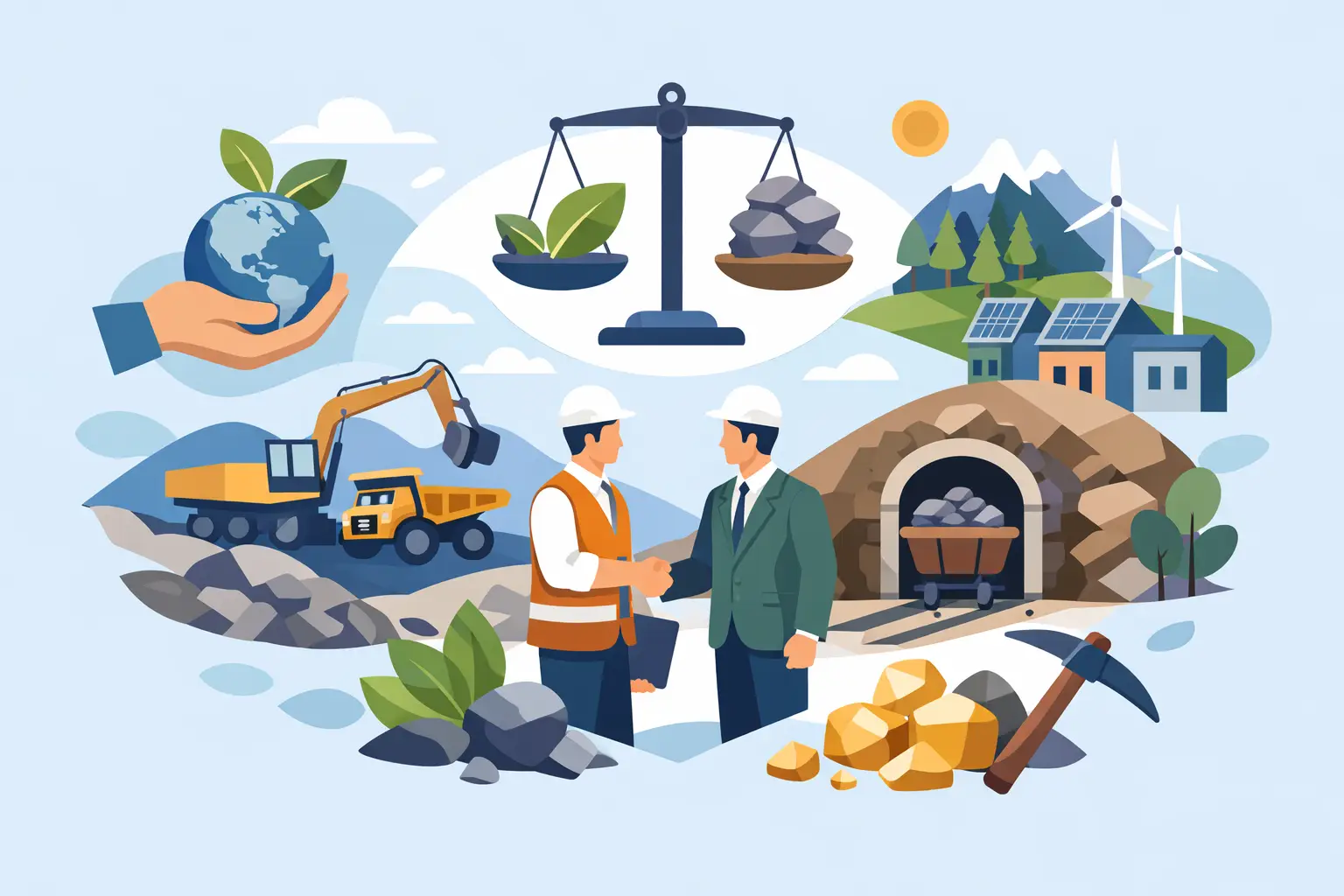
A shipment can arrive on time, meet assay targets, and still create serious exposure for the buyer. If the origin is unclear, labor standards are questionable, or export documentation does not hold up under review, the commercial risk extends far beyond the purchase price. That is why procurement teams keep asking the same question: what is ethical sourcing, and how does it apply in mineral supply chains where traceability and compliance are not optional?
In practical terms, ethical sourcing means obtaining materials through supply chains that can be verified as lawful, responsible, and properly documented. In mining, that standard reaches across the full chain of custody, from extraction and handling to export procedures and final delivery. It is not only about avoiding obvious misconduct. It is about establishing enough control over origin, labor conditions, environmental handling, trade compliance, and counterparties that a buyer can defend the purchase commercially and regulatorily.
What Is Ethical Sourcing?
For industrial buyers, ethical sourcing is a risk management framework as much as a values statement. It requires a supplier to demonstrate where a material came from, who handled it, whether the transaction complied with local and international rules, and whether the product moved through a chain that can be audited.
That matters especially in strategic minerals such as cobalt, cassiterite, columbite, copper, and gold, where demand is high and scrutiny is increasing. Buyers are under pressure from customers, lenders, regulators, and internal compliance teams to prove that supply is not linked to prohibited actors, abusive labor practices, fraud, or undeclared material substitution.
Ethical sourcing also does not mean the same thing in every context. For one buyer, the priority may be conflict-sensitive sourcing and chain-of-custody verification. For another, the immediate concern may be child labor risk, export legality, or accurate mineral classification. The core idea remains the same: a responsible source is one that can be verified, documented, and monitored.
What Ethical Sourcing Means in the Mining Sector
Mining supply chains are operationally complex. Material can move through multiple hands before export. Production may come from remote areas. Documentation standards may vary between operators. Because of that, ethical sourcing in mining depends less on marketing claims and more on control points.
The first control point is origin verification. A buyer should know the mine site or production area, the party authorized to sell the material, and the documents supporting legal extraction and transfer. Without that foundation, every downstream assurance becomes weaker.
The second is labor and human rights oversight. Ethical sourcing requires suppliers to show that production is not tied to exploitative labor practices, forced labor, or unlawful child labor. In mining regions where informal operations exist alongside licensed activity, this assessment has to be specific. A generic statement from a trader is not enough.
The third is environmental and operational responsibility. This is not always a simple pass-fail issue. Mining has an environmental footprint, and buyers in the real economy understand that. The question is whether the supplier is operating within lawful parameters, managing waste and site practices responsibly, and showing evidence of corrective action where risks exist.
The fourth is trade compliance. Ethical sourcing includes export permits, customs documentation, tax and royalty handling, sanctions screening, and product declarations that match the material being shipped. If the paperwork is incomplete or inconsistent, the buyer inherits avoidable risk.
Why Buyers Ask “What Is Ethical Sourcing” More Often Now
The pressure is coming from several directions at once. Manufacturers want cleaner upstream visibility. Battery and energy transition markets face rising scrutiny around mineral origin. Procurement leaders are being asked to balance supply continuity with stronger due diligence. At the same time, investors and end customers want proof, not assumptions.
This shift has changed how mineral sourcing decisions are made. Price and volume still matter, but they are no longer enough on their own. A lower-cost offer with weak documentation can be more expensive after delays, rejections, legal review, or reputational damage.
There is also a practical reason for the increased attention. Once a material enters a manufacturing process, tracing problems back to a source becomes harder and more costly. Buyers want sourcing discipline before the transaction closes, not after a compliance issue appears.
The Difference Between Ethical Sourcing and Simple Supplier Approval
Many companies approve suppliers based on product quality, commercial terms, and delivery capacity. That is necessary, but it is not the same as ethical sourcing.
Basic supplier approval asks whether a vendor can perform. Ethical sourcing asks whether the full transaction can withstand scrutiny. That includes chain-of-custody records, site-level visibility, licensing checks, transport documentation, export controls, and the ability to answer follow-up questions from auditors, banks, or downstream customers.
This is where many procurement teams find the gap. A supplier may be able to ship. That does not mean the source is sufficiently transparent. Ethical sourcing raises the standard from commercial capability to verified responsibility.
How to Evaluate an Ethically Sourced Mineral Supplier
A serious supplier should be able to explain its sourcing process clearly and consistently. If explanations change depending on who asks, or if the supplier avoids specifics about origin and documentation, that is a warning sign.
Buyers should look for evidence of traceability across the transaction. That can include mine-site identification, production records, transport records, export documentation, assay consistency, and documented chain-of-custody procedures. The exact paperwork will depend on the commodity and jurisdiction, but the principle is the same: the material should not become harder to verify as it moves downstream.
It also helps to assess how the supplier manages exceptions. Ethical sourcing does not mean a supply chain never encounters risk. It means risk is identified, documented, escalated, and addressed. A supplier with no visible process for incident handling is not necessarily low-risk. It may simply be operating without controls.
For buyers sourcing from Central Africa, local access and international trade capability both matter. A supplier may understand regional mining networks but lack export discipline. Another may understand paperwork but have weak upstream visibility. The stronger partner combines source-level verification with shipment-level execution. That is where a company such as HH Strategic Metals positions its value – not only securing material, but also supporting traceability, compliance, and export management as part of the transaction.
Common Misunderstandings About Ethical Sourcing
One common mistake is treating ethical sourcing as a branding exercise. In mineral trade, unsupported claims carry little value. Buyers need documentation, consistency, and operational transparency.
Another is assuming ethical sourcing means sourcing is risk-free. It does not. High-demand minerals often come from jurisdictions where logistics, governance, and site conditions require close management. The realistic goal is controlled sourcing, not perfect sourcing.
A third misunderstanding is that ethical sourcing applies only to large public companies. In reality, private importers, specialty manufacturers, traders, and industrial processors face many of the same exposure points. If a shipment is delayed at customs or questioned by a banking partner, company size does not reduce the problem.
Why Ethical Sourcing Is a Commercial Advantage
For procurement teams, ethical sourcing protects continuity. Verified supply chains are easier to defend internally, easier to present to customers, and less likely to trigger disruption during compliance review.
It also improves supplier quality over time. When origin, documentation, and handling standards are clearly defined, disputes over grade, ownership, and shipment status tend to decrease. The transaction becomes more predictable.
There is a strategic advantage as well. As supply markets tighten, buyers with disciplined sourcing frameworks are better positioned to secure long-term access. Suppliers that invest in traceability and compliance generally prefer customers who understand those requirements and can transact efficiently within them.
What Is Ethical Sourcing Worth to a Buyer?
The answer depends on the material, destination market, and regulatory burden, but the commercial value is real. Ethical sourcing can reduce shipment delays, strengthen audit readiness, support customer disclosure requirements, and lower the likelihood of buying material that cannot be comfortably resold or processed.
There are trade-offs, of course. A more controlled supply chain may require more documentation, more verification steps, and occasionally more time upfront. Yet for most industrial buyers, that is a workable cost. The alternative is often uncertainty hidden inside an apparently attractive offer.
For any buyer moving strategic minerals across borders, ethical sourcing is not a side issue. It is part of supplier qualification, transaction security, and long-term market access. The right question is not whether to require it, but how much evidence is enough for the level of risk your business is carrying.
The strongest sourcing relationships are built when that answer is clear before the first shipment moves.