
Single Post
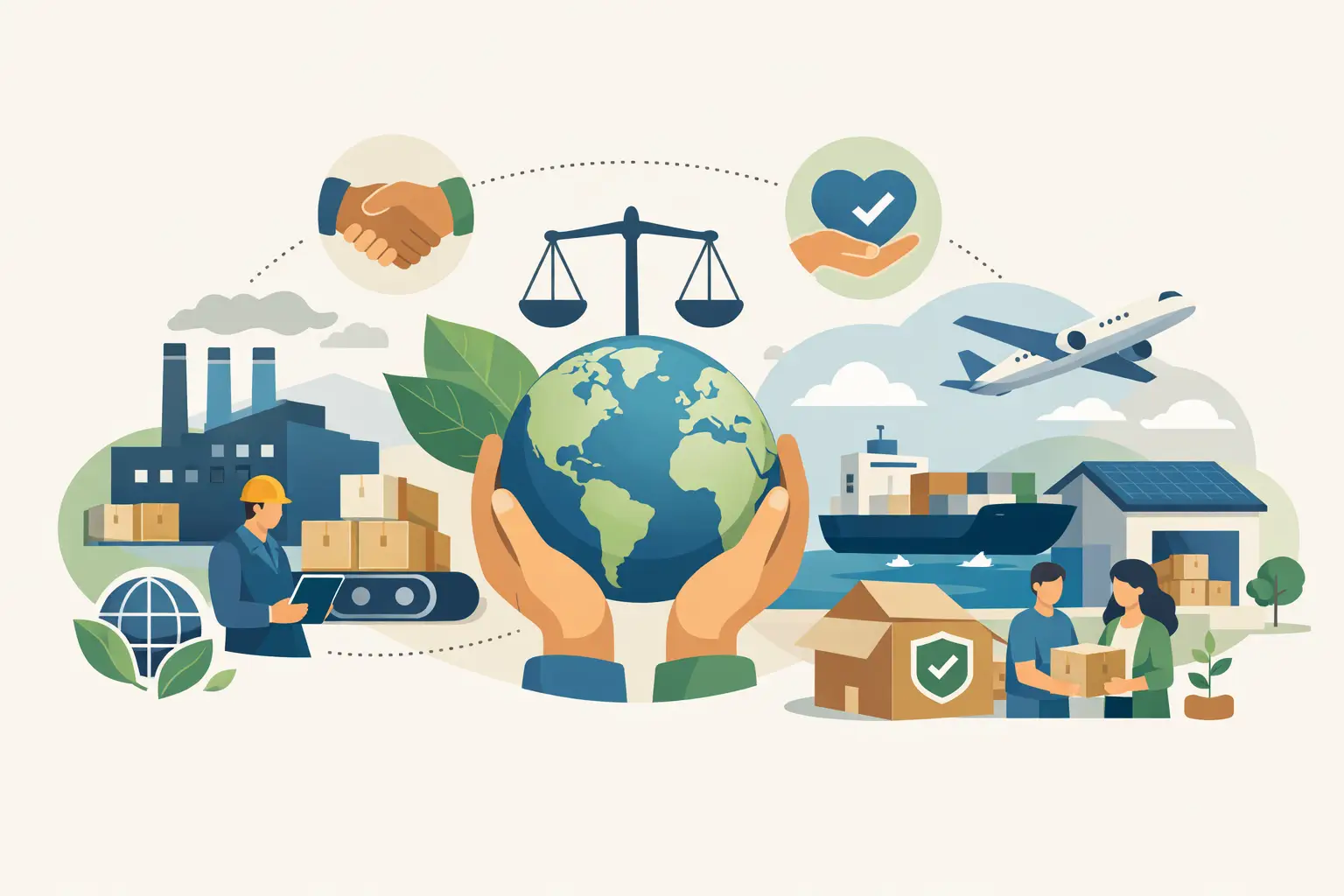
A shipment can meet grade, volume, and delivery timelines and still create serious commercial risk if its origin, labor conditions, or chain of custody cannot be verified. That is why buyers keep asking what is ethical supply chain management, especially in minerals, metals, and other high-risk sourcing categories. In practical terms, it means building a supply chain that is not only efficient, but also traceable, legally compliant, and responsibly managed from source to final delivery.
For procurement teams, this is not a branding exercise. It affects import eligibility, investor scrutiny, customer contracts, ESG reporting, and operational continuity. In sectors tied to strategic minerals, the cost of getting it wrong can include shipment delays, regulatory exposure, reputational damage, and loss of downstream market access.
What is ethical supply chain management in practice?
At a business level, an ethical supply chain is a sourcing and delivery system designed to reduce harm and increase accountability across every stage of trade. That includes how material is extracted, who handles it, what documentation supports it, how it moves across borders, and whether each transaction meets applicable standards.
The phrase often gets simplified into fair labor or environmental responsibility alone. Those issues matter, but for industrial buyers, the definition is broader. An ethical supply chain also includes verified sourcing, anti-corruption controls, product integrity, export compliance, transparent recordkeeping, and supplier oversight strong enough to stand up to audits and due diligence reviews.
In mining and mineral exports, ethics is closely tied to traceability. If a supplier cannot demonstrate where material came from, under what conditions it was produced, and how it was transferred through the chain, buyers are left carrying the risk. A low price or fast availability does not offset that exposure.
Why ethical supply chains matter in mineral sourcing
Strategic minerals sit under more scrutiny than many other commodities. Cobalt, coltan, cassiterite, copper, gold, and related materials can be linked to complex sourcing environments, shifting regulations, and heightened buyer due diligence. For US and international importers, responsible sourcing is now part of basic supplier qualification.
That shift is being driven by several forces at once. Regulators expect more documentation. Manufacturers want stable, audit-ready inputs. Investors and end customers want clearer proof of origin and labor practices. At the same time, procurement teams still need competitive pricing, dependable supply, and export execution that does not break under pressure.
This is where ethical supply chain management becomes operational rather than theoretical. A buyer needs to know whether the supplier can verify source material, maintain chain-of-custody records, handle export paperwork correctly, and coordinate shipment with full visibility. Ethics without execution is not enough. But execution without ethics creates a different kind of instability.
The core elements of an ethical supply chain
The first element is traceability. Buyers should be able to follow material from its source through aggregation, processing, documentation, export handling, and transport. The level of detail varies by product and jurisdiction, but traceability should not rely on verbal assurances.
The second is labor and human rights control. Ethical sourcing requires attention to working conditions, forced labor risk, child labor prevention, and fair treatment across the upstream chain. In mining regions where informal extraction can be present, this area needs active oversight rather than passive assumptions.
The third is legal and regulatory compliance. Ethical trade is inseparable from export documentation, customs accuracy, licensing, tax compliance, sanctions screening, and any applicable due diligence standards tied to minerals or country of origin. A supply chain can appear responsible on paper but still fail if compliance controls are weak.
The fourth is supplier verification and ongoing monitoring. Initial onboarding matters, but conditions can change. A serious supply chain management program checks counterparties, validates documentation, reviews sourcing practices, and watches for inconsistencies over time.
The fifth is logistics integrity. Material needs to move through approved channels with clear handoff records, secure packaging where relevant, and shipment coordination that preserves both product quality and documentation accuracy. Chain of custody is not only about the mine site. It extends through warehousing, customs, and delivery.
What buyers should look for from suppliers
If you are evaluating suppliers in high-risk or high-value mineral categories, the first question is not simply whether they claim to be ethical. The better question is how they prove control. A reliable supplier should be able to explain sourcing methods, verification procedures, compliance processes, and documentation standards in clear business terms.
That includes proof of origin, export records, quality documentation, transaction records, and visibility into how material is consolidated and shipped. When answers are vague, inconsistent, or overly promotional, risk usually increases. Serious suppliers tend to speak in specifics because they understand that procurement decisions depend on evidence.
Buyers should also assess whether the supplier can manage the full transaction, not just the material itself. Ethical supply chain performance is often strongest when sourcing, compliance, and logistics are coordinated under one accountable structure. When these functions are fragmented, documentation gaps and handoff failures become more likely.
For this reason, companies such as HH Strategic Metals position ethical sourcing as part of a broader control model that includes traceability, export compliance, and end-to-end logistics support. For international buyers, that integrated approach can reduce uncertainty significantly.
Common challenges and trade-offs
Ethical supply chain management is not frictionless. More controls can mean more documentation, longer qualification timelines, and tighter supplier screening. In some markets, that can reduce access to spot-priced material or limit supplier options in the short term.
There is also a cost dimension. Verification, audits, compliance handling, secure logistics, and documentation management require investment. Buyers sometimes compare ethical suppliers against lower-cost offers that provide less transparency. On paper, the cheaper option may look attractive. In practice, the total risk-adjusted cost can be much higher if problems emerge at customs, during customer audits, or in downstream reporting.
The right balance depends on the product, destination market, and buyer obligations. A trader with immediate resale flexibility may evaluate risk differently than a battery materials company supplying regulated OEM channels. But across most industrial markets, the direction is clear. Verified and responsibly managed supply is becoming easier to justify commercially because downstream scrutiny is rising.
How to strengthen an ethical supply chain
For buyers, improvement starts with supplier selection criteria that go beyond price and assay. Build sourcing decisions around origin verification, compliance readiness, labor-risk controls, and logistics competence. Then document those requirements clearly in onboarding and contracting.
It also helps to standardize due diligence. Procurement teams should know what records are required before purchase orders are issued, what exceptions trigger review, and how traceability data is maintained internally. Ethical sourcing becomes more dependable when it is built into procurement workflow rather than handled as a last-minute check.
For suppliers, the priority is operational proof. That means maintaining clean records, verifying counterparties, monitoring upstream practices, and ensuring export documentation matches the physical movement of goods. Buyers do not need perfect conditions in every market. They need confidence that risks are understood, managed, and disclosed honestly.
Technology can support this process, but it is not a substitute for discipline. Digital tracking tools, documentation systems, and reporting platforms help organize information. They do not replace field-level verification, compliance knowledge, or accountable trade execution.
What is ethical supply chain performance really measuring?
At its core, ethical supply chain performance measures whether a company can source and deliver material without creating preventable legal, human rights, or reputational exposure. It is a test of control. Can the business verify origin, assess risk, maintain documentation, and fulfill trade obligations with consistency?
For international mineral buyers, that question matters as much as grade and volume. A supplier that can deliver premium quality minerals with clear traceability, compliant export handling, and dependable shipment coordination is often the stronger long-term partner, even if the transaction requires more scrutiny up front.
Markets do not reward uncertainty forever. As procurement standards rise, ethical supply chains are becoming a practical requirement for access, continuity, and trust. For buyers operating across borders, the goal is straightforward: source material that can move through your business with confidence, not explanations.
The strongest supply chains are not just efficient. They are verifiable, responsible, and built to hold up when someone asks for proof.