
Single Post
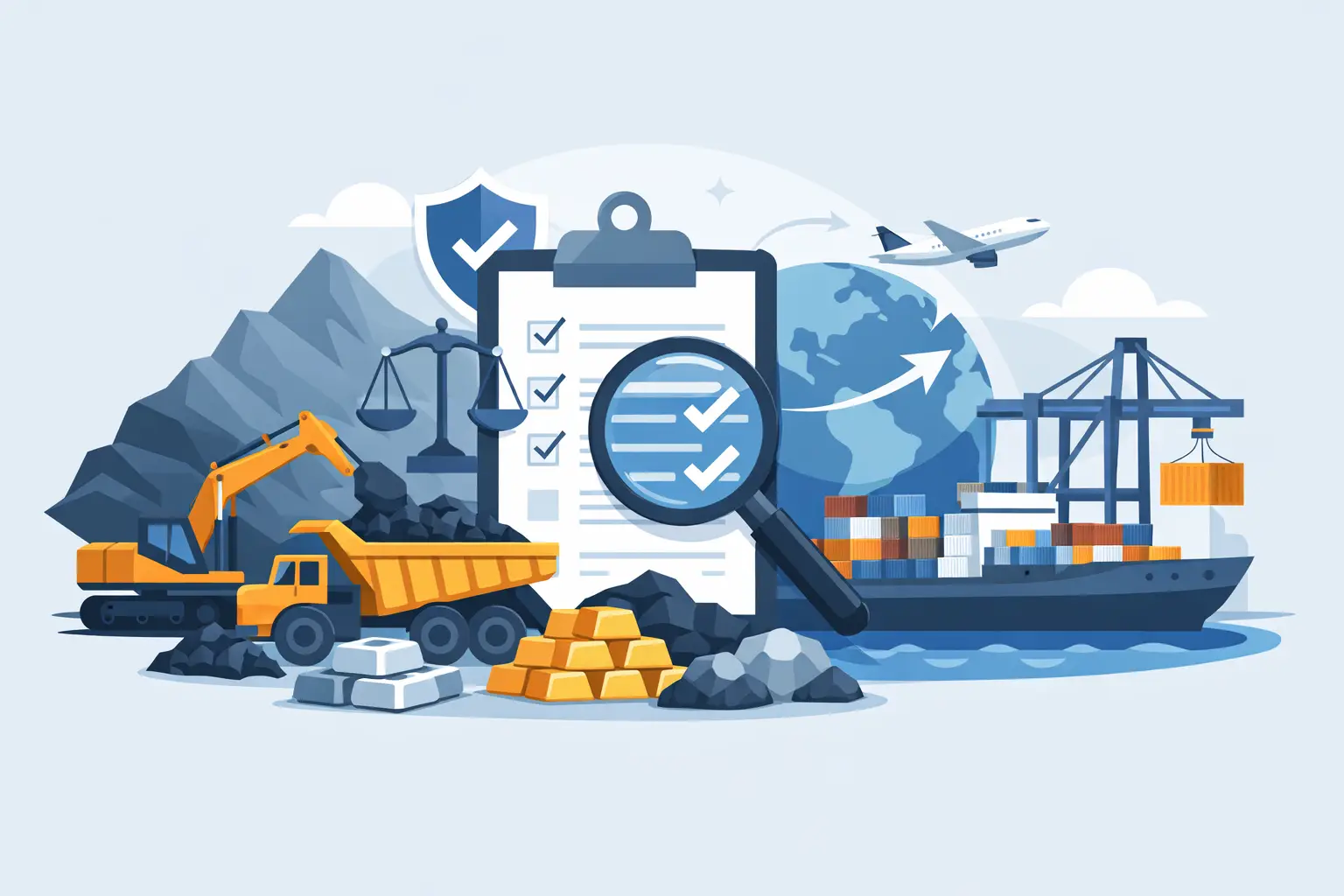
A shipment can be ready at the warehouse, fully paid, and still fail to move if one document is wrong, one permit is missing, or one party is screened too late. That is why buyers asking what is export compliance are really asking a larger question: how do you move regulated goods across borders without creating legal, financial, or operational risk?
In mineral trade, export compliance is the system of rules, checks, documents, and controls that govern whether a product can legally leave the country of origin and enter the destination market. It covers product classification, export permits, customs declarations, certificates of origin, sanctions screening, end-user review, transport documentation, and recordkeeping. For bulk minerals and gemstones sourced in high-risk jurisdictions, export compliance is not a paperwork formality. It is a core part of supply-chain reliability.
What Is Export Compliance?
At its most practical level, export compliance means verifying that the goods, seller, buyer, route, and supporting documents all meet applicable trade laws before shipment. That includes local export rules in the source country, customs requirements at the port of exit, and import-related expectations in the destination market.
For a mineral exporter, this can involve confirming legal source documentation, obtaining export authorization, validating mineral descriptions and quantities, aligning commercial invoices with packing and shipping data, and ensuring that no restricted party or prohibited destination is involved. If any part of that chain breaks down, the shipment may be delayed, seized, rejected, or investigated.
This is why sophisticated buyers do not treat compliance as an administrative afterthought. They treat it as part of supplier qualification. If a supplier cannot document origin, licensing, chain of custody, and export readiness, the commercial risk rises quickly.
Why Export Compliance Matters in Mineral Trade
Minerals are not ordinary consumer goods. They often move through jurisdictions with strict controls on extraction, taxation, environmental oversight, and conflict-mineral monitoring. They may also require assay reports, inspection records, or specific export certificates depending on the product and destination.
That makes export compliance especially important for commodities such as cobalt, cassiterite, coltan, copper, gold, and gemstones. Buyers in the US and other regulated markets are expected to understand where material came from, whether the export was lawful, and whether the transaction exposes them to sanctions, anti-money laundering concerns, or supply-chain due diligence failures.
There is also a commercial dimension. Noncompliant exports do not just create legal risk. They interrupt production schedules, create demurrage costs, delay customs clearance, and damage trust between buyer and seller. A low-priced shipment that arrives late or triggers an investigation is rarely low-cost in real terms.
The Core Parts of an Export Compliance Process
When companies ask what is export compliance in daily operations, the answer usually comes down to disciplined execution across several points of control.
Product and shipment verification
The first step is confirming exactly what is being exported. In mineral trade, that means accurate product identification, quantity verification, grade or specification review, and consistency across commercial and customs documents. A mismatch between invoice description and actual cargo can cause immediate problems at inspection or clearance.
Source and ownership documentation
Exporters need to show that the goods were lawfully sourced and that the exporter has the right to sell and ship them. Depending on the commodity and jurisdiction, this may involve mining licenses, purchase records, traceability documentation, tax receipts, or certificates issued by competent authorities.
Licensing and permit review
Some shipments require export permits or prior approvals before goods can leave the country. This varies by product, value, destination, and local law. A common mistake is assuming that because a product is commercially available, it is automatically export-ready. In practice, export eligibility depends on documentation and regulatory status, not just inventory availability.
Party screening and destination checks
A compliant export process reviews the buyer, consignee, intermediaries, banks, and logistics providers against restricted-party and sanctions concerns. It also checks whether the destination or intended use creates any legal issue. Even when the goods themselves are allowed, the transaction can still be prohibited if one of the parties is restricted.
Customs and transport documentation
Commercial invoices, packing lists, certificates of origin, inspection certificates, bills of lading, and customs declarations must align. Small inconsistencies can have large effects, especially where customs authorities are already alert to valuation, classification, or origin concerns.
Recordkeeping
A strong compliance process leaves a clear audit trail. If customs, banks, or buyers request proof months later, the exporter should be able to produce complete records quickly. That includes not only final documents, but also internal approvals and verification steps.
What Export Compliance Looks Like in Practice
In cross-border mineral supply, compliance is rarely handled by one document or one department. It is a coordinated process between sourcing teams, warehouse operations, documentation staff, customs brokers, freight partners, and buyer-side procurement or compliance teams.
For example, a cobalt shipment may require origin records, export permits, quality verification, and transport documentation that all match the commercial contract. A gemstone shipment may involve different valuation sensitivities, handling controls, and customs documentation. The process changes with the product, route, and destination market.
That is where experience matters. A supplier can have access to material but still struggle to execute internationally if documentation standards are weak or compliance controls are inconsistent. On the other hand, a supplier with strong export discipline can reduce delays, improve predictability, and support cleaner onboarding for institutional buyers.
Common Export Compliance Risks Buyers Should Watch
Not every compliance failure starts with bad intent. Many begin with poor process control. In mineral export, the most common problems include incomplete source documentation, inconsistent product descriptions, expired permits, valuation mismatches, and late-stage party screening.
There is also the risk of overconfidence. Some exporters rely on local familiarity and assume that routine shipments will clear because they have done similar deals before. That approach can fail when destination-country scrutiny increases, banking requirements tighten, or buyers request more detailed proof of origin and chain of custody.
For procurement teams, the key question is not whether a supplier has shipped before. It is whether that supplier can demonstrate repeatable compliance across documentation, traceability, and logistics execution.
How Buyers Can Evaluate an Export-Ready Supplier
The right supplier should be able to explain its compliance process clearly and support it with records. Buyers should expect visibility into source verification, export documentation, shipment controls, and logistics coordination.
A credible exporter will usually be comfortable discussing how it handles permits, customs declarations, mineral traceability, inspection support, and delivery milestones. If answers are vague, delayed, or inconsistent, that is usually a process warning sign rather than a communication issue.
For many international buyers, especially those sourcing from Central Africa, compliance capability is as important as price and volume. HH Strategic Metals operates in that reality, where verified supply, documentation control, and shipment coordination are essential to buyer confidence, not optional add-ons.
What Is Export Compliance Really Measuring?
At a deeper level, export compliance measures operational control. It shows whether a supplier understands the legal path from mine to port, can maintain document integrity, and can manage the trade transaction without exposing the buyer to avoidable risk.
It also reflects commercial maturity. Companies that take compliance seriously tend to forecast better, communicate exceptions earlier, and recover more effectively when regulations or shipping conditions change. That does not mean every shipment is simple. It means problems are managed with process, not improvisation.
For buyers in manufacturing, energy, metallurgy, and commodity trading, that distinction matters. A compliant supplier is not just helping goods cross a border. It is helping protect production schedules, financing flows, customer obligations, and downstream reporting requirements.
Export compliance is often only visible when it fails. The better way to view it is as a sign of whether a supplier can perform under scrutiny. In mineral trade, where origin, documentation, and timing carry real commercial weight, that is not a back-office function. It is part of the product being delivered.